Whether you are gearing up for exams, or are in the midst of exam stress whilst preparing you will be pleased to hear that there are foods that can help. In this post, we explore the best brain supporting foods to eat before exams, to help you or your child get the best possible grades (provided suitable revision has been done). This post is designed for anyone taking exams no matter what level they are. The information here could also be used when preparing for an interview, presentation, or long day at work, as all will benefit from brain boosting foods.
These food are to be eaten leading up to and during the exam period, whether it’s just a few days, weeks or months. Don’t forget, lighter meals can be better so that you don’t feel drowsy after.

Brain Supporting Foods to Eat Before Exams
Cognitive Function
This refers to our ability to process information and encompasses various mental processes including learning, thinking, problem solving and decision making. Cognitive health is important for our everyday activities, and where we look after this we can support overall brain function, and also may delay decline in later years. Cognitive health can be affected by various factors. These include genetics, environmental influences as well as our lifestyle.
Some mental health issues such as depression and anxiety can negatively affect our cognitive function. This can result in problems with focus and memory. Environmental factors such as excessive noise, and poor light levels can also result in cognitive decline.
Can Food Affect Cognitive Function?
In a word, Yes!!! Fortunately, there are ways to improve cognitive function. One of these ways is to eat a healthy diet and this is where we will focus within this post. A balanced diet will result in a good mix of both vitamins and minerals as well as fibre to help keep the body healthy. Some foods have a higher impact than others especially when we need to be able to stay focused, learn and remember new information.
Foods that Can Significantly Improve Cognitive Function
Omega-3 Fatty Acids
Omega-3 fatty acids may help to protect brain cells from damage and inflammation. They are also part of the brain cell membrane make up, helping them to function properly, improves flexibility and helping with signal transmission.
Oily fish such as salmon, tuna, mackerel, trout as well as flaxseeds, chia seeds and walnuts all contain omega-3 fatty acids. Fish contain EPA – eicosapentaenoic acid, and DHA – docosahexaenoic acid. Nuts and seeds contain ALA – alpha-linolenic acid – precursor to EPA and DHA and other fatty acids.
These fats, especially EPA and DHA can important in the role of neurogenesis – the process where new neurones are created – especially in the hippocampus and prefrontal cortex ( parts of brain involved in learning and memory ).
These fats help promote a healthy blood flow in the brain. By doing this, the brain has an improved oxygen supply. This in turn helps improve brain function from improved learning, memory, the ability to recall information, as well as mood. They have also been shown to extend attention span and concentration. When taken regularly, omega-3 fatty acids help to reduce the decline of cognitive function alongside age-related brain changes including Alzheimer’s etc.
It’s important to note that studies suggest that omega-3 can also increase attention in children and teens with ADHD.

Garlic and Chilli Air Fryer Potatoes
Complex Carbohydrates
These are great foods to eat especially when you have exams. Complex carbohydrates help to supply the brain with it’s main fuel source: glucose. Complex carbohydrates are digested far slower than simple carbohydrates, therefore the glucose supply to the brain is constant. This means that focus can be maintained for longer which ideal for revision and exams. The fibre in these foods help to support a healthy gut microbiome. This microbiome communicates with the brain resulting in various benefits. Such benefits include improved mood, reduction in anxiety, improved ability to focus and a reduction in brain fog. Foods with complex carbohydrates are also rich in vitamins, minerals and antioxidants to help promote healthy cognitive function.
Simple carbohydrates and easier and quicker to digested resulting in sudden spikes in blood glucose levels and then crashes. This leads to loss of concentration and mental clarity.
Complex carbohydrates are found in a wide range of foods including whole grains ( brown rice, oats, whole wheat bread, pasta and quinoa ), legumes ( beans, lentils, chickpeas ), starchy vegetables ( sweet and white potatoes, corn, peas ), and fruit ( apples, berries – antioxidant rich, these may memory and cognitive function, bananas and peaches ).
Simple carbohydrates are found in milk, milk products, fruit, they are also found in processed and refined sugar as found in candy and also soft drinks.

Protein
Protein is an essential food when it comes to brain function. This is because it provides the building blocks for neurotransmitters, structural proteins, and also enzyme that are required for various brain processes. Proteins play a part in the formation of dendritic spines. These are required for efficient communication between neurones and are essential for learning are memory processes. New dendritic spine formation or enlargement, strengthens synaptic connections and elimination of spines weakens them. This process allows for the storage of memories as well as allowing the brain to learn and adapt.
Protein can be found in a wide range of foods including eggs, lean meat, chicken, turkey, salmon, tuna, sardines, mackerel and herring. It is also found in nuts ( almonds, walnuts and pistachios ), seeds (chia seeds, flaxseeds, pumpkin seeds ) and beans ( pinto beans, soybeans, black beans, kidney beans, chickpeas ), legumes ( peanuts – yes they’re legumes, lentils, beans and chickpeas ).
Green Vegetables
These are antioxidant and nutrient rich. They contain the likes of folate, lutein and vitamin K which help protect brain cells as well as reduce any inflammation. Folate is believed to inhibit build up of the protein amyloid beta which would otherwise form plaques in the brain of adults and is associated with Alzheimer’s. Lutein is known to reduce inflammation within the brain due to its powerful antioxidant properties. Regular consumption in adults can equate to having the cognitive ability to adults 11 years younger.
Green vegetables that you should be adding to your diet include spinach, kale, chard and broccoli. They can be added to salads, smoothies, as a side, or, even hidden in foods.

Foods to Avoid
We all know that in general overly processed foods should be avoided. These can have more of a significant impact for those that are older and need to take exams. Processed foods are often high in fats, sugars and may also contain additives. These can can affect brain function, mood, reduced memory none of which are good if you are taking, or will be taking exams.
Excess refined sugars can result in inflammation as well as insulin resistance which can negatively impact brain health. Trans fats are thought to affect cognitive function and memory when consumed over a number of years.
The impact of these is worse when you are older. Therefore, it’s important to ensure you get into the routine of eating a balanced diet from as early on as possible.
Other Brain Boosters
Green Tea
This has been shown to improve mood, reduce anxiety and help increase alertness and focus. This is due to the amino acid – L-theanine which act similarly to caffeine. Avoid drinking it too late to avoid issues sleeping.
Coffee
This should be used in moderation. The caffeine helps to boost both alertness and focus. This should be used in moderation. Excess can affect sleep.
Water
Water is essential for brain health. It allows for good communication between cells, improves concentration, mood, decision making, cognitive processing and short term memory.
Turmeric
An often overlooked spice. This has many important properties, but for our purposes here, we will focus on its curcumin content which may potentially improve mood and also memory. It also has antioxidant and anti-inflammatory properties which also contribute to good brain health.
Avocadoes
Their high monounsaturated fat, lutein content and more, contribute to why it is thought to help with promoting overall brain health and cognitive function including an improvement in working memory and problem solving efficiency.
Dark Chocolate
This has a high flavonoid content – an antioxidant which helps to blood flow to the brain, improve mood, memory, spatial awareness, alertness and focus. It lowers cortisol levels which in turn reduces stress. It is also though that dark chocolate boosts nerve cell growth and brain activity in the hippocampus and prefrontal cortex.
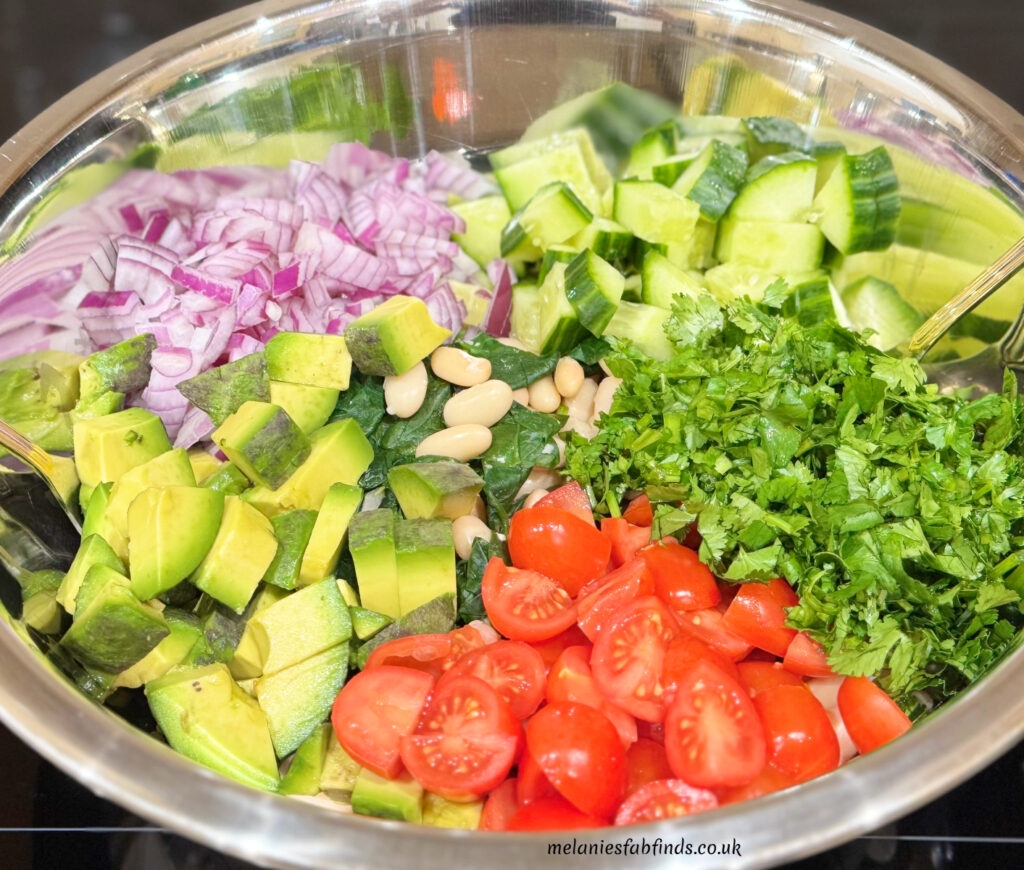
Bean Avocado Spinach and Tomato Salad
Summary
I hope you have found my post Brain Supporting Foods to Eat Before Exams both interesting and helpful. As you can clearly see, the foods we eat have a direct impact on how well our brain functions. As a result it is best to start eating a balanced diet with plenty of fresh fruit, veg, etc as early as possible.
You know have all the information you need to improve your cognitive function enough to improve your ability to study, process and retain information, and more. Good luck in your exams x
Which Brain Supporting Foods to Eat Before Exams would you be most likely to choose?
(from those mentioned, not from the recipe links included)
Enjoyed this Post?
Subscribe to Melanie’s Fab Finds RSS feed to see my latest posts. Posts will include recipes, reviews, etc. and as a result, you will hear about my new posts and competitions first!
Watch our fab product reviews on YouTube x
Discover more from Melanie's Fab Finds
Subscribe to get the latest posts sent to your email.
I always swear by salmon with potatoes and salad when I need to focus. Also something healthy for breakfast like porridge and berries.
Salmon and potatoes work well as long as you are careful how many potatoes are included in a portion. Porridge and berries is a great breakfast option.
I need to keep this in mind. And pass it onto my daughter. She has exams next week. I think she’d go for the berries. She loves her berries.
Berries are awesome. They are full of vitamins, fibre, antioxidants and are a great brain food.
I’d go for fish and avocadoes. They are both light but very healthy and support so many bodily functions that we need. I would also drink coffee! LOL I must have coffee. It’s non-negotiable!
Maureen
Coffee can be good but in moderation.
Great ideas for healthy foods! I love omega 3s and supporting brain health. I’ll have to make some of these next time I need extra focus.
It is important for daily life. As not everyone eats a balanced diet this serves as a reminder that these can help with brain health.
Ooh! I didn’t know that steak is good too. I am saving this and sharing it with my sister.
It sure is but make sure you buy lean meat. Fillet is a great choice.
The mixed berry oat looks out of this world, wow!!! I am gonna make it for sure. For brain support, I usually eat nuts, i feel they help me focus more.
Nuts are great for energy and focus. they make a great snack and addition to meals.
I would definitely choose protein for brain function. It sounds like the right fit for me since it supports so many brain processes and bonus. Plus it’s not fattening, lol.
Ha, yes. There are plenty of reasons why we need protein on a daily basis.
These brain-boosting food tips are so helpful! I love Salmon fish, so would go for fish, nuts and berries 😍.
Wonderful and tasty choices!!!!
I would go for the avocados! I eat a few slices of avocado each day for a heathy, filling fat. I also love coffee to drink and try to enjoy fish 3 x’s a week!!
Avocadoes are super healthy and taste amazing too x
My younger sister have exams coming up, and I’ve been looking for simple ways to help them stay focused. Going to stock up on a few of these brain-boosting foods now!
I hope all goes well with her exams. She might find my post about coping with exam stress helpful too xx
Yes, I agree to this. We should eat nutritious food before taking an exam. Because our brain needs to work extra effort to it and in that case only food can give an energy for the brain to really be good at it.
These foods are in reality what we should be eating anyway but many of us have laxes and so this is a good reminder of what we should focus on eating.
My grandmother use to always give me walnuts and dark chocolate before finals, which was always so much fun. Turns out, she knew they were good for supporting your brain health! I do love walnuts – they are my favorite.
They are yummy and can be used in a wide variety of recipes as well as eaten as they are which is great.
This is really interesting and highlights what you eat can really have a positive impact for your brain as well as your body! Food for thought so they say!
They sure do!!!